
 Ref. M126711CHNR
40 mm · Super clone · 904L
Cal. DD3285
The GMT-Master II collection focuses on references associated with DD3285: steel examples with split-colour inserts and two-tone or weighted variants. Use the bezel palette and bracelet configuration to identify the design. A functional check of the local hour and date change is the clearest way to compare the intended GMT operating layout. The model and date should remain visible in the record.
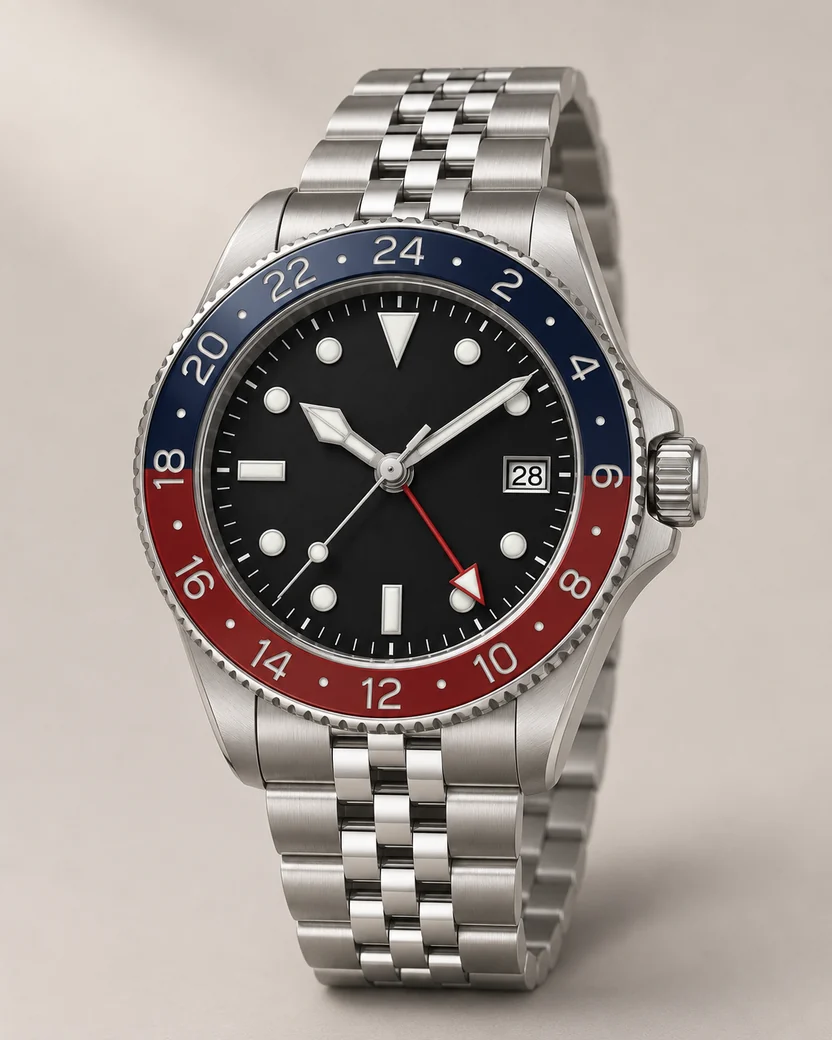
A GMT dial has an extra hand read against a 24-hour scale. On a jumping-hour layout, adjust the main local hour hand in short steps and record that the minutes remain in place. Inspect the date near midnight while moving the local hand, following the movement’s operating instructions. A record of what actually moves is more useful than a dial crop for separating two clocks that display the same locations.
Keep a log of the ceramic colours and bracelet pattern. Even within a split-colour insert, the halves can change shade with a polarized display or a bright reflection. The transitions have intentional positions on the 24-hour scale. A straight-on image at neutral white balance identifies where those transitions sit. Treat an alloy, precious-metal or tungsten description as a supplier specification that belongs with supporting evidence.
To compare the ceramic and clasp, ask for a paired set of front and side images. In the front view check the 24-hour marker positions relative to the dial. In the side view check how the end link fills the space between the lugs and how the rim of the bezel rises from the case. Differences in camera distance are often more visible than the manufacturing difference under study.
Use the time-setting video to check typical operations before grading rate. Have it show the crown movement, minutes and date without switching cuts. Capture any subsequent timegrapher reading with the watch at a stated state of wind. Two models using the same movement label can still produce different readings under different conditions.
Moving the local hour in separate one-hour increments lets the wearer change local time while retaining the minutes setting. In the expected layout, the 24-hour hand continues to represent the other time reference.
Use photographs with the same light and angle. Inspect the transition line and external scale position as well as the hue, which responds strongly to direct illumination.
It shows whether the expected control behavior works in both directions. Capture the date when crossing midnight backward if the watch’s operating instructions allow the test. Keep the minute and reference-time hands in the frame. This makes it easier to separate an hour adjustment from resetting all hands.